14th May 2026
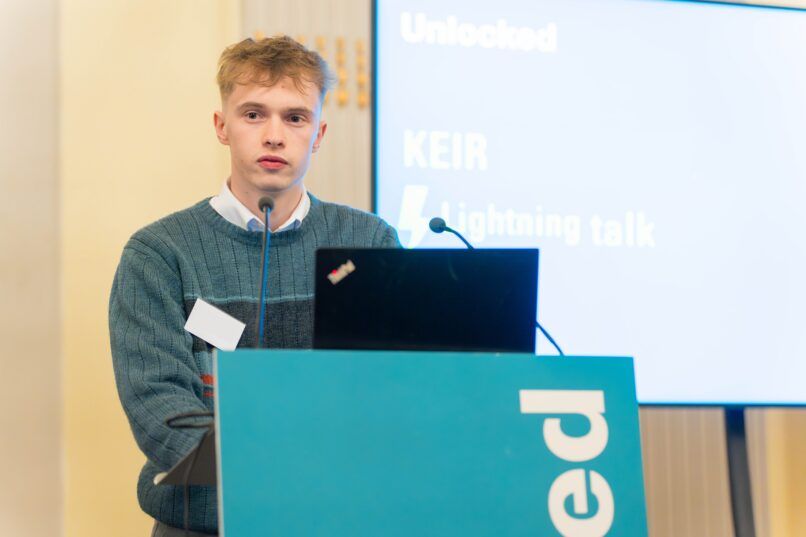
Unlocked participants and Ambassadors are having an impact in a range of different roles in their prisons, transforming outcomes for those in their care and driving culture change. Keir, part of our 2024 cohort, is making a real difference in his new role as a New Colleague Mentor.
Keir provides support to new members of staff, ensuring they have the tools required to have the greatest possible impact on those in their care and helping to build a rehabilitative, positive culture in his establishment. We spoke to Keir about his experiences on the Unlocked programme so far, and how his new role is supporting him to lead change.
Why did you apply for the Unlocked programme?
I always wanted to go into a career in the public sector. I wanted to be involved in something that was meaningful and purposeful, contributing to the collective good. I thought Unlocked was a very interesting way to do that. I liked how hopeful it was and the capacity to be a cause of change.
How have you found your time on the programme?
Maybe I was a little naïve about changing the world when I first started! One of the biggest things I’ve learnt on the programme is that winning doesn’t mean you need to fix everything. It’s the small wins and the minor improvements. I’ve enjoyed it a lot. I like the relationships you build, and seeing people grow and improve over time.
What has been the impact of the relationships that you’ve built?
There are a couple of great success stories on my wing of people who I’ve key-worked or just spent a lot of time with, trying to problem solve. Building those relationships and trying to see the good in people. I think oftentimes prisoners just need someone who will believe that they can be better, who will push them to improve and to stick with the job that they hated or to get back in touch with their family.
Why did you want to apply for the New Colleague Mentor role to support new prison officers?
For me, it was a difficult job to move into and settle into. What I wanted was someone on the house block who I knew I wasn’t annoying by asking a load of questions, and if I needed some help on the landing, I could ask them to help me. And that’s what I want now for every staff member coming onto my house block, someone who is visible to help integrate them into the staffing group, but also who they can always ask a million questions.
What does your new role look like?
I’ve got a caseload of people in their probation years who I’m responsible for supporting and signposting to developmental opportunities, checking in, liaising with their line managers, and providing additional support when required. Day-to-day what I try and do is spend as much time on the wings as possible with new staff, because that’s where I’ll learn the most about how they work. It’s where I’m on hand to answer questions.
What impact do you hope you can have in this role?
One of the biggest impacts I want to have is to instil the culture and values that I think the Unlocked training does. It’s the soft skills and the perceptions of hope and of change. I want to drive that and encourage optimism and a belief that the prison service can be better and that staff are at the forefront of that. When I was told that I got the job, the first thing they mentioned was that the values I had were what they wanted from a New Colleague Mentor, which was nice to hear.
How did your training with Unlocked prepare you for this role?
I’m trying to implement the one-to-one aspect of Unlocked’s Mentoring Prison Officer model with new starters. Having that space to sit down and talk through problems was so helpful, especially when I first started because every day was a massive learning curve. That space away from the landings with someone who will listen and encourage me to think of solutions was so helpful for my own development and confidence. I think a lot of people would benefit from that in the prison service more broadly.